1.Laboratory Astrophysics
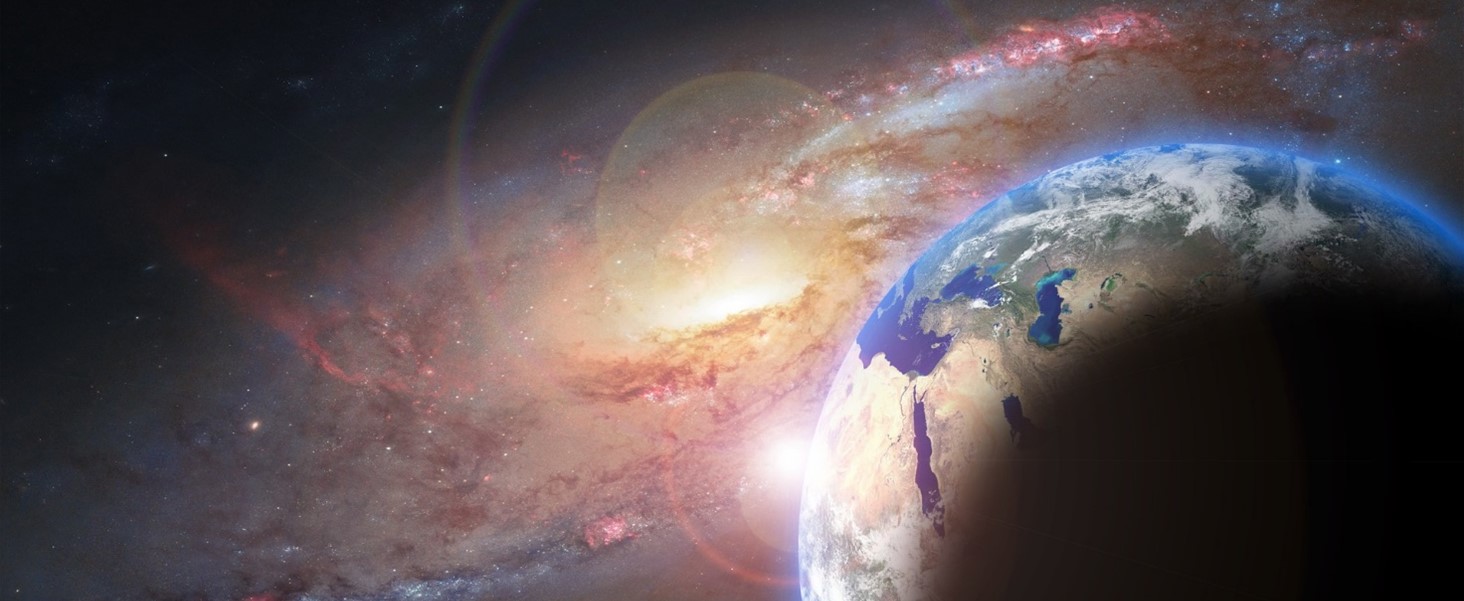
What is the energy source of the universe? Where do the high-energy particles flying through space come from?
“Laboratory Astrophysics” aims to experimentally unravel these cosmic mysteries. Countless particles travel through space at nearly the speed of light in space. While there are several hypotheses regarding the origins and acceleration mechanisms of these high-energy particles, many remain unproven. This is because the universe is vast; the only thing we can observe from Earth is “light”, and there is a limit to how far we can send observation satellites.
In laboratory astrophysics, we reproduce astrophysical phenomena -sach as collisionless shocks and magnetic reconnection- in the laboratory and observe the emitted plasmas and X-rays. Thanks to the recent experimental results of our laboratory, the physical mechanisms of high-energy particle acceleration, which have long been shrouded in mystery, are gradually revealed. [Y. Kuramitsu et al. Nature Communications, vol. 9. 5109 (2018), URL(https://www.nature.com/articles/s41467-018-07415-3)]
In other words, laboratory astrophysics is the study of “creating a miniature universe”.However, we cannot reproduce the entire universe in a laboratory; we focus on specific physical phenomena and reproduce a portion of them on a microscopic scale. Therefore, simulations using supercomputers are essential to connect the laboratory with the actual universe. We tackle various topics in astrophysics from both experimental and simulation approaches.
We conduct experiments at some of the world’s largest laser facilities, such as “GEKKO XII / LFEX “(Institute of Laser Engineering, The University of Osaka) and “J-KAREN-P” (Kansai Photon Science Institute, Kyoto), as well as the X-ray Free Electron Laser “SACLA” (RIKEN, Hyogo) and the Heavy Ion Medical Accelerator in Chiba “HIMAC” (QST, Chiba). We also collaborate with international institutions, including the High-Field Physics and Ultrafast Technology Laboratory (National Central University,Taiwan)and Extreme Light Infrastructure(ELI,Romania), offering students the opportunity to experience cutting-edge research facilities world wide..
2.Laser Fusion
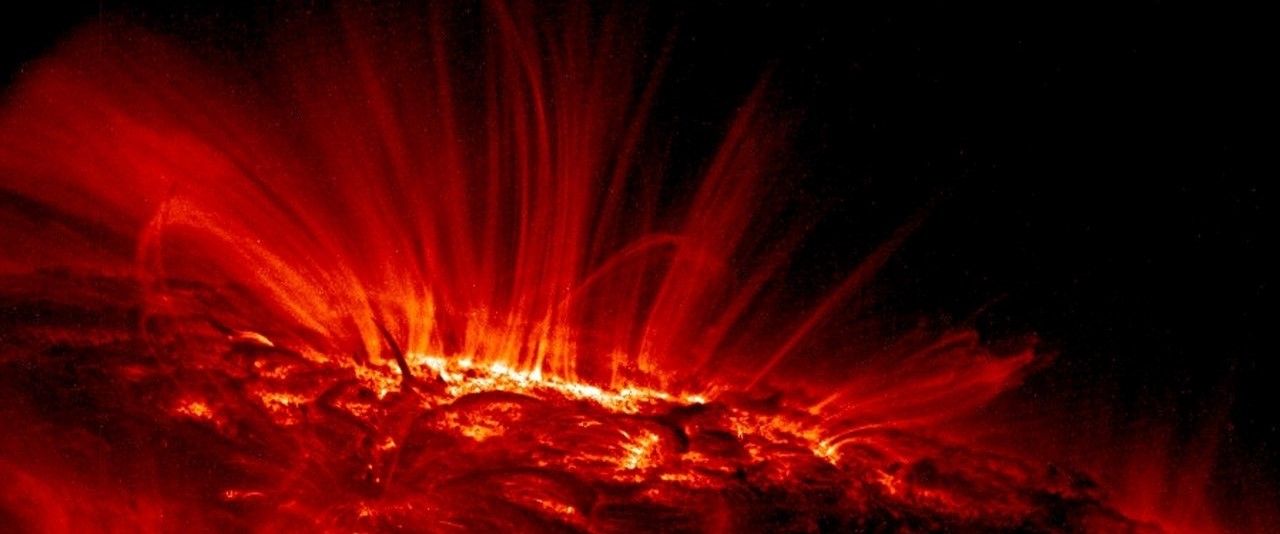
Amid calls for a decarbonized society due to global warming and the depletion of underground resources, “Nuclear Fusion” has drawn attention as a sustainable, next-generation method that uses “seawater” as a fuel resources. It is being researched worldwide as a clean, safe and practically inexhaustible energy source. While the international ITER project struggles with repeated delays and budget overruns, “Laser fusion” -a relatively compact, laser-driven fusion method- has seen a resurgence in recent years, with research institutes and private fusion startups emerging one after another.
In laser fusion, high-power lasers are used to instantaneously compress and heat hydrogen fuel (specifically, a mixture of deuterium and tritium) to induce a fusion reaction by creating temperatures (tens of millions of degrees) and pressures (tens to hundreds of millions of atmospheres) comparable to the core of the sun. This is truly the study of “recreating the sun on Earth“, and interdisciplinary research topic that combines the aforementioned laboratory astrophysics with an engineering perspective.
We focus on a laser fusion approach called “Fast Ignition” to achieve higher energy efficiency. This approach mitigates various requirements and major challenges in laser fusion, such as “suppression of hydrodynamic instabilities”, “handling high-energy particle transportation”, “fabrication for microscopic fuel targets”, and “countermeasures against heat load and raditation damage to reactor walls”. We conduct experiments and simulations regarding the topics below:[T. Gong, H. Habara et al., Nature Communications, vol. 10, 5614 (2019)]
- Interaction between ultra-high-intensity lasers and high-density plasmas
- Interaction between ultra-high-intensity lasers and nanostructured targets
- Ablation plasma crossing phenomena and aerosol formation
- Hydrogen isotope uptake phenomena by ablation materials
3.Development and Application of Quantum beam
高出力レーザーを用いて荷電粒子を準光速まで加速する研究は1980年代から行われ,今も重粒子線がん治療をはじめ,産業,生命科学,材料科学など幅広い分野で注目されています.レーザーを使う利点は,従来型の加速器の1,000倍を超える非常に強力な加速電場(~TV/m)を形成できることです.これにより,ミクロスケールの小さな領域で荷電粒子をメガ電子ボルト(MeV)を超えるエネルギーまで加速することが出来ます.
本研究室では,このレーザー粒子加速の原理を用いて従来型の加速器を可能な限りコンパクト化し,高エネルギー電子やイオン,さらにはそれらの2次反応によって生成する中性子線などの「量子ビーム」を使って医療応用のほか,ラジオグラフィによる画像診断,爆発物検査など様々な応用の実現を目指しています.
本研究室が世界に誇る技術の一つは,「グラフェン」を用いたレーザーイオン加速法です.グラフェンは炭素原子が六角形格子状に結合してシート状になった物資で,この世で最も薄く,軽く,強い材料です.また非常に高い電気伝導度と熱伝導率を有する驚異の物質と呼ばれています.我々は,レーザーでこのグラフェンを打ち抜けるように両面が自由表面の大面積グラフェンターゲット(Large-area suspended graphene: LSG)を開発し [N. Khasanah, Y. Kuramitsu et al., High Power Laser Sci. Eng. vol. 5, e18 (2017)],その驚異的な薄さと強度,電気伝導特性を利用して非常に高いエネルギーのイオン加速に成功してきました [Y. Kuramitsu et al., in preparation].
また,最近はメガ電子ボルト(MeV)のさらに1,000倍高い「ギガ電子ボルト(GeV)」級のイオン加速を目指した研究にも取り組んでおり,レーザー粒子加速技術の習熟を目指すとともに,宇宙物理などへの新たな研究展開を模索しています.
こうしたレーザー粒子加速に基づく量子ビーム応用を実用的なものにするためには,非常に高い集光強度のレーザーを10~100 Hzといった高い照射頻度で安定して動作させる必要があります.これに加えて,レーザー照射位置に正確なタイミング,高い位置精度で照射ターゲットを連続供給する技術や,データ取得の自動化,膨大なデータを迅速に分析する技術などが必要となります.本研究室では,2021年度に着任した安部勇輝助教らとともに,こうした高繰り返しレーザー実験のための基盤技術の開発にも力を入れていきます.